
Peru Emerges as Latin American Crypto Powerhouse
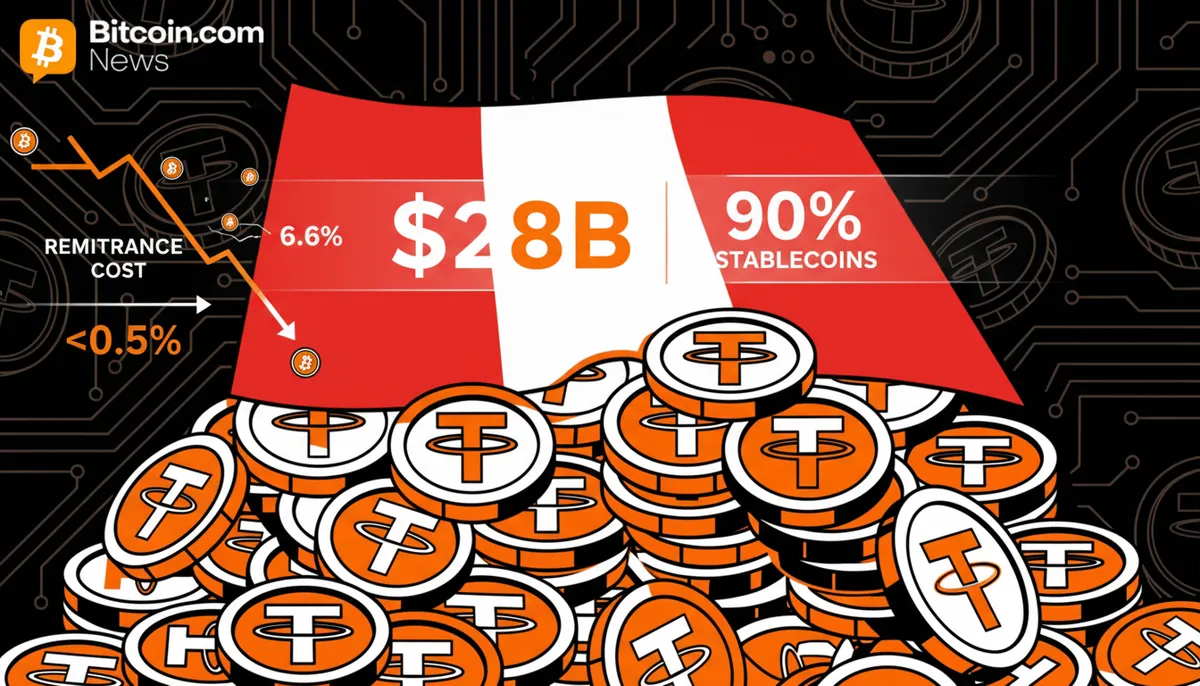
Peru has established itself as a major cryptocurrency economy, with its annual crypto market reaching $28 billion according to recent reports. The South American nation has cracked the top 6 crypto economies in Latin America, driven primarily by practical financial applications rather than speculative trading.
What sets Peru apart is the overwhelming dominance of stablecoins, which account for 90% of all cryptocurrency transactions in the country. This usage pattern represents a fundamental shift toward cryptocurrency as a mainstream financial alternative rather than a speculative investment vehicle.
Stablecoins Transform Cross-Border Payment Landscape
The driving force behind Peru's stablecoin adoption centers on remittances and cross-border payments. Traditional banking systems have historically imposed significant costs on these transactions, with fees reaching 6.6% according to reports. Stablecoin-based solutions have dramatically reduced these costs to under 0.5%.
This cost reduction translates into substantial savings for Peruvian families. Reports indicate that households can save between $180 and $420 annually on remittance fees alone by utilizing stablecoin-based transfer systems instead of traditional banking channels.
Addressing Financial Inclusion Gaps
The surge in stablecoin usage reflects broader challenges with traditional banking infrastructure in emerging markets. According to reports, conventional banking systems fail to adequately serve millions of people in these regions, creating demand for alternative financial solutions.
Stablecoins are addressing real financial problems rather than serving purely speculative purposes. The technology provides a practical solution for families and businesses that need to transfer money across borders efficiently and affordably.
Latin America Leading Global Crypto Adoption
Peru's success represents a broader trend across Latin America, where emerging markets are demonstrating faster cryptocurrency adoption rates than developed nations. The region's embrace of digital currencies stems from practical needs rather than investment speculation.
The stablecoin revolution in Peru also positions these digital assets as potential inflation hedges in economically unstable regions. Countries experiencing currency volatility and economic uncertainty are increasingly turning to stablecoins as a more reliable store of value and medium of exchange.
Institutional Adoption on the Horizon
Reports suggest that institutional adoption represents the next phase of cryptocurrency integration in Peru and similar markets. As stablecoins prove their utility for everyday financial transactions, businesses and larger organizations are expected to integrate these solutions into their operations.
This institutional interest signals growing legitimacy for cryptocurrency applications in the Global South, moving beyond retail adoption toward broader economic integration.
Implications for Global Financial Systems
Peru's experience demonstrates how cryptocurrency technology can serve as genuine financial infrastructure rather than merely speculative instruments. The country's success with stablecoin-based remittances and cross-border payments provides a blueprint for other emerging markets facing similar banking limitations.
The shift toward practical cryptocurrency applications represents what reports describe as "financial inclusion in action." This trend suggests that cryptocurrency's most significant impact may come through solving real-world financial access problems rather than serving as alternative investment vehicles.
Looking Forward
As Peru continues to demonstrate the practical benefits of stablecoin adoption, other nations in the region are likely monitoring these developments closely. The country's position as a top-6 crypto economy in Latin America establishes it as a regional leader in cryptocurrency integration.
The success of stablecoins in reducing remittance costs and improving financial access suggests that Peru's model could influence cryptocurrency adoption strategies across emerging markets globally.